Thyroid Disease
Assessment and management of thyroid nodules and thyroid cancer
Assessment and management of thyroid nodules and thyroid cancer
Thyroid nodules are common and usually benign lumps that develop within the thyroid gland. While most thyroid nodules do not cause symptoms or require surgery, careful assessment is important to exclude malignancy and guide appropriate management.
Thyroid nodules
Thyroid nodules are common and usually benign lumps that develop within the thyroid gland. While most thyroid nodules do not cause symptoms or require surgery, careful assessment is important to exclude malignancy and guide appropriate management.
What Are Thyroid Nodules?
The thyroid gland is a butterfly-shaped gland located at the front of the neck, responsible for regulating metabolism and energy levels through hormone production. A thyroid nodule is a discrete lump or swelling within the thyroid tissue.
How Common Are Thyroid Nodules?
Thyroid nodules are very common, particularly with increasing age. The majority are benign, and only a small proportion are cancerous. Careful assessment allows identification of nodules that require further investigation or treatment.
Symptoms
Most thyroid nodules are discovered incidentally. When symptoms do occur, they may include:
- A visible or palpable lump in the neck
- Sensation of pressure or fullness in the neck
- Difficulty swallowing
- Changes in voice (rare)
- Shortness of breath if the nodule is large
Assessment and Diagnosis
Assessment begins with a thorough medical history and neck examination. Investigations may include:
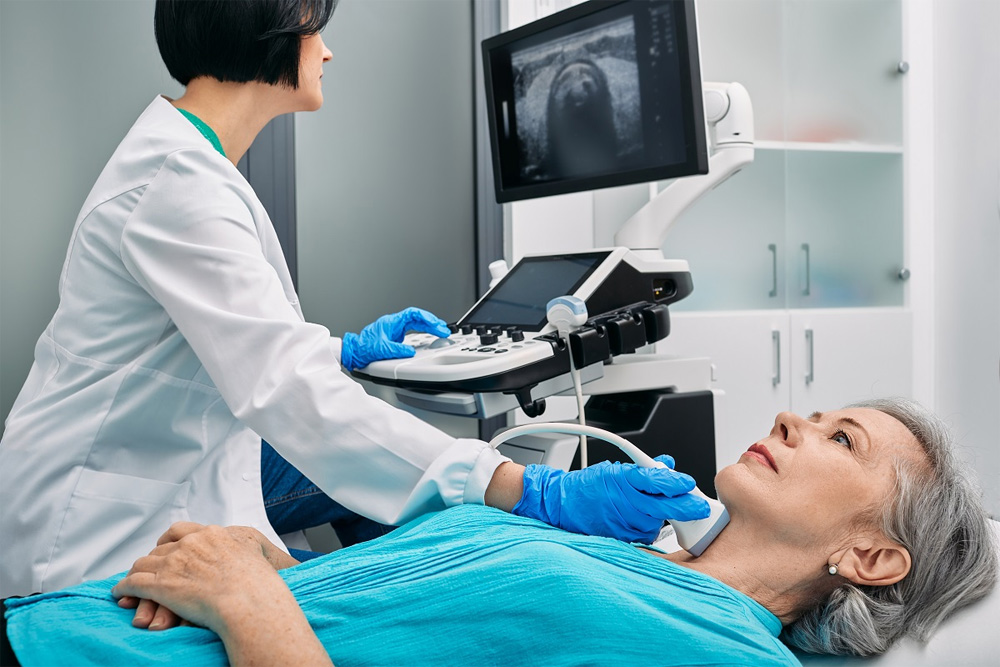
- Ultrasound of the Thyroid - High-resolution ultrasound is the key imaging test to assess the size, structure, and characteristics of thyroid nodules and to guide further management.
- Fine Needle Aspiration (FNA) Biopsy - If a nodule has concerning features or reaches a certain size, an ultrasound-guided FNA biopsy may be recommended. This procedure is performed under local anaesthesia and involves using a thin needle to collect cells for analysis.
Management Options
Management depends on the size of the nodule, biopsy results, symptoms, and patient preference.
Observation and Monitoring - Benign nodules without symptoms may be monitored with periodic ultrasound and clinical review.
Surgical Management
Surgery may be recommended if:
- The nodule is suspicious or confirmed to be malignant
- Biopsy results are indeterminate
- The nodule is growing or causing compressive symptoms
- There are cosmetic concerns
- There is patient preference after appropriate counselling
Surgical options include removal of part of the thyroid (hemithyroidectomy) or the entire thyroid gland (total thyroidectomy), depending on the clinical situation.
Thyroid Cancer
Thyroid cancer results from the abnormal growth of cells within the thyroid gland. It often presents as a thyroid nodule and is frequently detected incidentally on examination or imaging. It generally has an excellent prognosis when diagnosed and treated appropriately as many are slow growing and highly treatable.
Types of Thyroid Cancer
Papillary Thyroid Cancer - The most common type of thyroid cancer. It typically grows slowly and has an excellent long-term prognosis.
Follicular Thyroid Cancer - Less common than papillary cancer and usually has a good prognosis, though it can spread via the bloodstream in some cases.
Medullary Thyroid Cancer - A rarer form arising from specialised thyroid cells. It may occur sporadically or as part of inherited syndromes.
Anaplastic Thyroid Cancer - A rare and aggressive form of thyroid cancer, usually occurring in older adults.
Symptoms and Signs
Many patients with thyroid cancer have no symptoms. When present, symptoms may include:
- A painless lump in the front of the neck
- Enlargement of a thyroid nodule
- Hoarseness or voice changes
- Difficulty swallowing
- Shortness of breath
- Enlarged lymph nodes in the neck
Assessment and Diagnosis
Assessment involves careful evaluation to determine the nature and extent of disease.
Clinical Assessment - A detailed history and examination of the neck, thyroid, and lymph nodes.
Ultrasound and Imaging - High-resolution ultrasound is essential for evaluating thyroid nodules and cervical lymph nodes. Additional imaging in the form of a CT scan may be required in selected cases.
Fine Needle Aspiration (FNA) Biopsy - Ultrasound-guided biopsy is used to assess suspicious nodules and lymph nodes.
Blood Tests and Genetic Testing
Blood tests may assess thyroid function. Genetic testing may be indicated in cases of medullary thyroid cancer.
Treatment and Management
Management is individualised based on cancer type, size, spread, and patient factors.
Surgical Management
Surgery is the primary treatment for most thyroid cancers. Depending on the disease, this may include:
- Removal of part of the thyroid (hemithyroidectomy)
- Total thyroidectomy
- Removal of involved lymph nodes in the neck
Adjuvant Treatment
Some patients may require additional treatment following surgery, including radioactive iodine therapy or long-term thyroid hormone replacement.
Ongoing Surveillance
Long-term follow-up is essential and may include blood tests, ultrasound surveillance, and clinical review.
Cutting-edge ENT care with a focus on patient outcomes
Our specialists bring a wealth of ENT experience to the Shire. Our commitment to surgical excellence ensures every patient is provided with the best treatment options for their condition.